
When you sit down with a carpenter or interior designer to plan your kitchen, wardrobe, or TV unit, you will almost always hear three names thrown around: plywood, HDMR, and MDF. Most homeowners nod along and trust whoever is in the room. But understanding the difference between these three materials can genuinely change the quality, durability, and finish of your interiors.
This is not a complicated topic once it is broken down properly. Plywood is a layered wood product built for strength. MDF is a smooth, dense board ideal for detailed finishes. HDMR is a newer, moisture-resistant engineered board that sits between the two in many ways. Each has its place, and none of them is universally the best choice for every application.
This guide will help you understand what each material actually is, where it performs well, where it does not, and how to make the right call for your home.
What is Plywood?
Plywood is made by bonding multiple thin layers of wood veneer together, with the grain of each layer running perpendicular to the next. This cross-grain structure is what gives plywood its strength and resistance to warping.
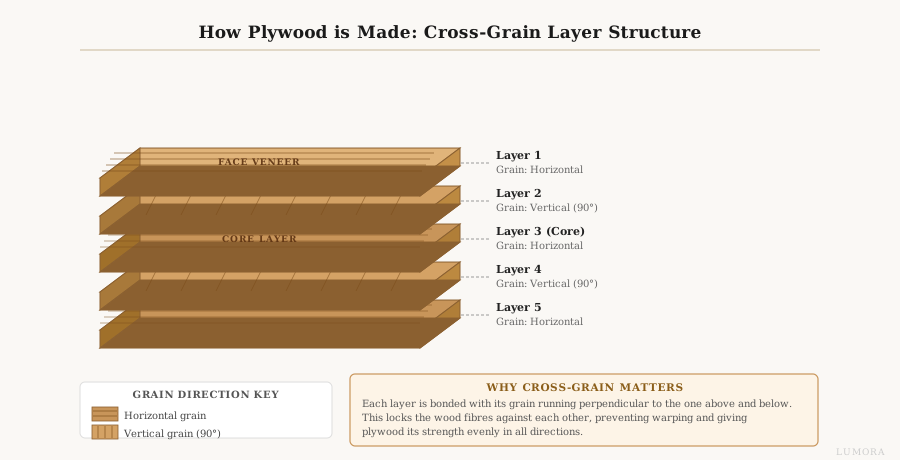
In Indian interiors, you will commonly come across a few grades. BWR (Boiling Water Resistant) plywood is used in kitchens and anywhere moisture is a concern. MR (Moisture Resistant) grade is suitable for general interior furniture. Marine plywood is the highest-grade option, used in areas with direct water exposure. These grades are defined under IS 303 by the Bureau of Indian Standards, which is the official quality specification all reputed plywood manufacturers in India are required to conform to.
Plywood is typically the backbone of good furniture. Kitchen carcasses, wardrobe frames, and heavy shelving units are almost always built with plywood because it handles weight well and holds screws firmly. The downside is that edge quality can be inconsistent and cheaper brands tend to have voids or weak inner layers that compromise the finished product.
What is HDMR Board?
HDMR stands for High-Density Moisture-Resistant board. It is an engineered wood product that is denser and more moisture-tolerant than standard MDF. The surface is smooth and consistent, which makes it easy to laminate or finish.
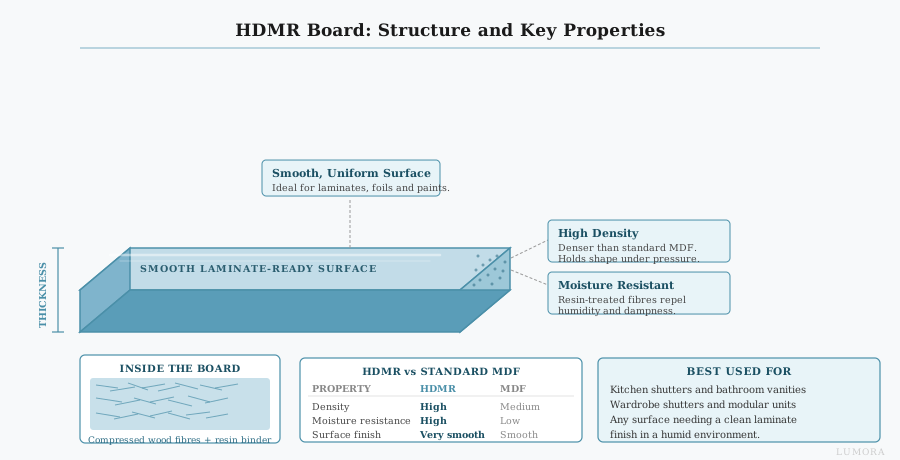
HDMR has become increasingly popular in modular interior projects across India over the last several years. It is commonly used for kitchen shutters, bathroom vanity units, wardrobe shutters, and modular furniture components where a clean finish and moderate moisture resistance are both needed.
Think of HDMR as the middle ground between plywood and MDF. It does not have the raw structural strength of good plywood, but it handles humidity better than standard MDF and gives a cleaner, more consistent surface for laminates and veneers.
What is MDF Board?
MDF stands for Medium Density Fibreboard. It is made by breaking down wood residuals into fine fibres, combining them with resin and wax, and pressing them under high heat and pressure into dense, uniform boards.
The result is a board with an extremely smooth surface that takes paint, lacquer, and laminate exceptionally well. Because it has no grain, it is also ideal for precision routing, carved profiles, and decorative panel work. This is why MDF is so commonly seen in TV units, decorative wall panels, and shutter designs with intricate patterns. Choosing the right board material is only one part of a well-planned interior, and understanding types of glass for interior design helps you make equally informed decisions for every surface in your home.
The trade-offs are worth knowing. Standard MDF is not moisture-friendly. It swells when exposed to water and is heavy compared to plywood of similar thickness. There are moisture-resistant MDF variants available, but even those are better suited to low-humidity exposure rather than direct or frequent moisture contact.
Plywood vs HDMR vs MDF: Quick Comparison
| Feature | Plywood | HDMR | MDF |
|---|---|---|---|
| Strength and load-bearing | High | Moderate | Low to moderate |
| Moisture resistance | High (BWR grade) | High | Low (standard) / Moderate (MR grade) |
| Surface finish quality | Moderate | High | Very high |
| Ease of painting or lamination | Moderate | High | Very high |
| Weight | Moderate | Heavy | Heavy |
| Screw holding capacity | Excellent | Good | Poor to moderate |
| Routing and carving | Difficult | Limited | Excellent |
| Best use cases | Structural frames, carcasses, shelving | Kitchen and bathroom shutters, modular furniture | Decorative panels, TV units, painted shutters |
| Cost (general) | Medium to high | Medium to high | Low to medium |
Costs vary significantly based on brand, thickness, grade, and city. Always ask for the specific brand and grade before comparing prices.
Which Material Works Best for Each Room?
Kitchen
The kitchen is the most demanding environment in any home from a material perspective. Heat, moisture, steam, and daily use all add stress to the furniture.
For kitchen carcasses (the box structure that holds everything together), BWR-grade plywood remains the most trusted choice among experienced carpenters and designers. It handles moisture over the long term without losing structural integrity.
For kitchen shutters, HDMR is a strong option. It provides a smooth, consistent surface for laminate application and holds up well in the typical humidity levels of an Indian kitchen. Standard MDF should generally be avoided for kitchen shutters unless it is well-sealed and used in a dry zone away from the cooking or sink area.
Wardrobes and Bedroom Furniture
A well-built wardrobe typically combines materials strategically. Plywood is used for the frame and internal structure, where screw holding and weight support matter most. MDF or HDMR shutters give the wardrobe a clean, finished look with sharp edges and smooth laminate or paint.
This combination approach is what most good modular interior brands and experienced designers recommend. Using only MDF throughout a wardrobe, for example, can cause issues with hinges and handles over time because MDF does not grip screws as well as plywood does.
Living Room and TV Units
This is where MDF really earns its place. TV units and entertainment panels often feature routed grooves, carved profiles, or backlit panel designs. MDF handles all of this well because of its uniform, grain-free composition.
Floating shelves, decorative wall panels, and false ceiling trims in living rooms also commonly use MDF for the same reason. Since these applications are not load-bearing and are generally away from direct moisture, the limitations of MDF rarely come into play here.
Bathrooms and Wet Areas
The bathroom is where material choices matter the most and where the most mistakes are made. Standard MDF should not be used in bathrooms. Even moisture-resistant MDF variants have limits and should not be placed in areas with direct water splashing or high condensation.
HDMR is the better choice for bathroom vanity shutters and cabinets, provided the edges are properly sealed and the hardware is appropriate for a wet environment. For the structural frame of bathroom furniture, BWR plywood remains the right call. If you are also planning your bathroom door, our guide on how to choose a bathroom door covers material options, frame types, and what actually holds up in high-humidity conditions.
Common Mistakes People Make When Choosing Board Material
These are the mistakes that lead to swollen shutters, loose hinges, and furniture that looks worn out within two or three years.
- Using standard MDF in kitchens or bathrooms without proper sealing on all six sides, including the edges
- Choosing cheaper plywood grades for load-bearing furniture to save cost, only to deal with sagging shelves later
- Not specifying materials in writing when giving a work order to a carpenter or contractor
- Assuming all plywood is the same quality because two boards look identical from the outside
- Going entirely with HDMR or MDF for a wardrobe frame instead of reserving plywood for the structural parts
A simple habit that helps: ask your carpenter or designer to write the specific board brand and grade into the quotation. It takes one line to add and protects you from material substitutions later.
Does Board Material Affect How Long Your Interiors Last?
Yes, significantly. In Indian climates, where humidity levels fluctuate widely across seasons, the wrong material in the wrong place will show problems within a few years. Monsoons in particular are hard on interiors that are built without considering moisture exposure.
Warping, delamination, hinge failure, and edge swelling are almost always linked to the wrong board being used in a given application or to low-grade material being passed off as a higher grade. These are not just cosmetic issues. Once a carcass warps or swells, the shutters do not close properly, and the structural integrity of the unit is compromised.
This is why material specification, not just design, is a core part of any serious interior project. The finish you see is only as good as the board it sits on. The same principle applies to every material decision in your home, whether you are choosing between glass windows vs traditional windows or picking the right board for your kitchen.
A Practical Note on Cost
Plywood in good grades (BWR or commercial grade from reputed brands) is generally the most expensive of the three on a per-sheet basis. HDMR sits in a similar range for quality variants. MDF is typically more affordable, though this varies by thickness, brand, and city.
The mistake many homeowners make is comparing only the per-square-foot cost without considering how much of each material is going into a project and for what purpose. A slightly higher spend on good plywood for structural work usually saves money over the project’s lifetime compared to replacing furniture that deteriorates early.
Conclusion
There is no single winner in the plywood vs HDMR vs MDF debate. Each material has a clear role. Plywood handles structure and load. MDF delivers finish quality for decorative work. HDMR bridges the two when moisture resistance and a smooth surface are both needed. The best interiors use all three thoughtfully, matching each material to the specific demands of the space it will live in.
If you are planning kitchen work, a wardrobe, modular furniture, or a full home interior and want guidance on materials, finishes, and execution, Lumora works with homeowners, architects, and commercial clients to deliver interiors that are built as well as they look.
Frequently Asked Questions
Which is stronger: plywood or MDF?
Plywood is significantly stronger than MDF in terms of load-bearing capacity and screw holding ability. Plywood is built from cross-bonded wood layers, which gives it structural integrity that MDF, a compressed fibre board, cannot match. For frames, carcasses, and shelving that need to carry weight, plywood is the right choice.
Can MDF be used in kitchens?
Standard MDF should not be used in kitchens, especially near sinks, cooking zones, or areas with steam and splashing. It absorbs moisture and can swell or delaminate over time. Moisture-resistant MDF is a limited option for dry kitchen zones, but BWR plywood or HDMR are far more suitable for most kitchen applications.
What is the difference between HDMR and MDF?
HDMR (High-Density Moisture-Resistant board) is denser and more moisture-resistant than standard MDF. It holds up better in humid environments like kitchens and bathrooms, while MDF offers a smoother surface that is better suited to decorative applications in dry areas like living rooms and bedrooms.
Which board material is best for wardrobes in India?
A well-built wardrobe typically uses plywood for the internal frame and structural panels, and MDF or HDMR for the shutters. Plywood provides the screw-holding strength needed for hinges and handles, while MDF or HDMR shutters give a clean, smooth finish for laminates or paint.
Is HDMR board waterproof?
HDMR is moisture-resistant, not fully waterproof. It handles humidity and occasional moisture exposure better than standard MDF, making it suitable for kitchens and bathroom vanities. However, it should still be edge-sealed properly and should not be used in areas with direct, sustained water contact.

Ankit Singh is a content writer and interior solutions specialist at Lumora, based in Indore. He writes about glass solutions, window systems, interior design, and architectural materials with a focus on helping homeowners and professionals make informed decisions. With hands-on exposure to residential and commercial glass projects across Indore, Ankit covers topics including toughened glass, UPVC windows, aluminium systems, glass railings, partitions, and modern interior design trends. His writing combines practical field knowledge with clear, accessible explanations for readers at every stage of their project.